

Taking Media Captures
Follow these instructions for taking media captures across different platforms:- Capturing
- Uploading media
- Desktop
- Figma
- iPhone
- Android
The Navattic Capture Extension can be used to Capture screenshots and video of any application that can be opened in a browser. When capturing with the extension, select
Screenshot or Video.Desktop Capture
The Navattic Desktop app lets you capture screenshots of applications that can’t be opened in a browser, including native Windows and macOS apps. Download the app for your platform:
After installing, open the app and sign in with your Navattic account. Choose a capture source:
- Display: captures your full screen
- Window: hover over a window to highlight it, then click to confirm your selection
- Area: drag to define a capture region on your screen
- Device: captures a connected iOS or Android device via a screen mirroring app
- Clicks: a screenshot each time you click
- Video: a recording of everything you do
Record video in the Desktop app
Video recording is available for the Display and Window sources. On the Area and Device sources the Video capture type is unavailable, so those sources record clicks only. The floating toolbar shows how long you have been recording, along with four controls:- Stop recording: ends the recording and saves it
- Pause and Resume: hold the recording and pick it back up, without splitting it into two captures
- Restart recording: discards what you have recorded so far and starts the same session over
- Discard recording: throws the recording away and returns to the start screen
Desktop app recordings capture your screen only. They do not record sound.
Recovering missing captures
If a capture session fails to start, screenshots and recordings may be saved to a temporary folder without being uploaded. You can recover these files from the app’s Troubleshooting screen.1
Open Settings
In the Desktop app, click the settings icon to open Settings.
2
Open Troubleshooting
Click Troubleshooting at the bottom of the Settings screen.
3
Recover your captures
The Recover missing captures tool shows how many files are waiting. Click Recover to
upload them.
4
View your demo
If recovery succeeds, the captures open automatically in your browser as a new demo.
Click the refresh icon next to the file count to re-check for missing captures at any time.
Edit Media Captures
Media Captures can be edited to tell the perfect story for your demo. Open a Media Capture and clickEdit to open the Media Capture Editor.
In the editor, the capture name, a download button, and Versions sit above the capture, and the editing tools sit in a toolbar below it. Edits in the top bar lists the changes you have not saved yet, and Save stores them as a new version. Open Versions to go back to an earlier version of the capture.
If your workspace has both editors, switch between them from
More options in the top bar: Try the new editor or Revert to old editor.
- Device Frames
- Background
- Crop
- Blur
- Draw
- Copilot
- Scroll
- Alt text
Display your demo inside a realistic Device frame, such as a Mobile, Desktop, or Tablet, to match the application’s platform. This helps visitors imagine using your product on their own device and adds visual polish. You can also switch orientations and device types to best suit the flow of your demo.For the best results, use images that match the aspect ratio of the device frame you plan to use. Images that don’t match will either be letterboxed or require scrolling.Mobile frames (portrait)
See how Mobile Device Frames look in action by viewing Calm’s demo.
Tablet frames (portrait)
Desktop frames
The plain Mobile, Tablet, and Desktop shadow frames scale to fill the available space and don’t require a specific aspect ratio.
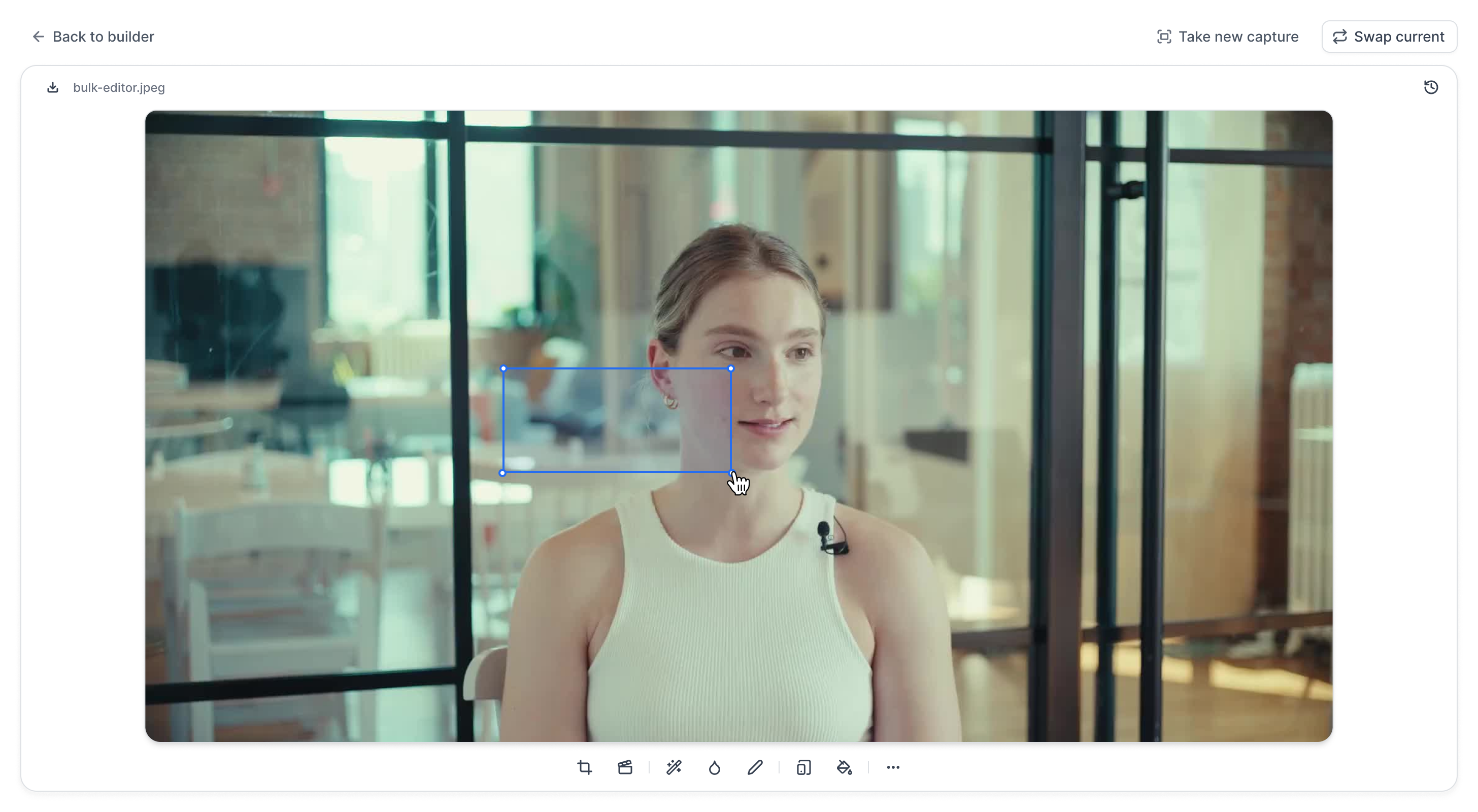
Edit an image with Copilot
Copilot can change part of an image for you: remove a stray element, swap a label, or clean up a background. You select the area to change, describe the change, and Copilot returns an edited image for you to accept or undo.Copilot editing is available for image captures in workspaces with Copilot enabled. It is not
available for video or GIF captures.
1
Select the area to change
Click Edit with Copilot in the toolbar, then drag a box around the part of the image you want to change. With no other tool active you can drag the box straight onto the capture, which turns on Copilot for you. Drag the corners to adjust the box. Copilot changes only what is inside the box, so keep it tight around the area.
2
Describe the edit
Type what you want in Describe an edit and press Enter, or click to send it. Describe one change at a time.
3
Wait for the result
The editor shows its progress while Copilot works. To stop a generation, click or press Escape.
4
Review the result
How does this look? opens under the capture with a before and after view of the area you selected. Drag the divider to compare the two. Rate the result with or , click Undo to put the original back, or close the panel to keep the edit.
5
Save the capture
Click Save to store the edited image as a new version of the capture.
Video Editor
For video captures, Navattic includes a built-in Video Editor. It lets you trim and crop your footage before it’s added to your demo, no external tools required.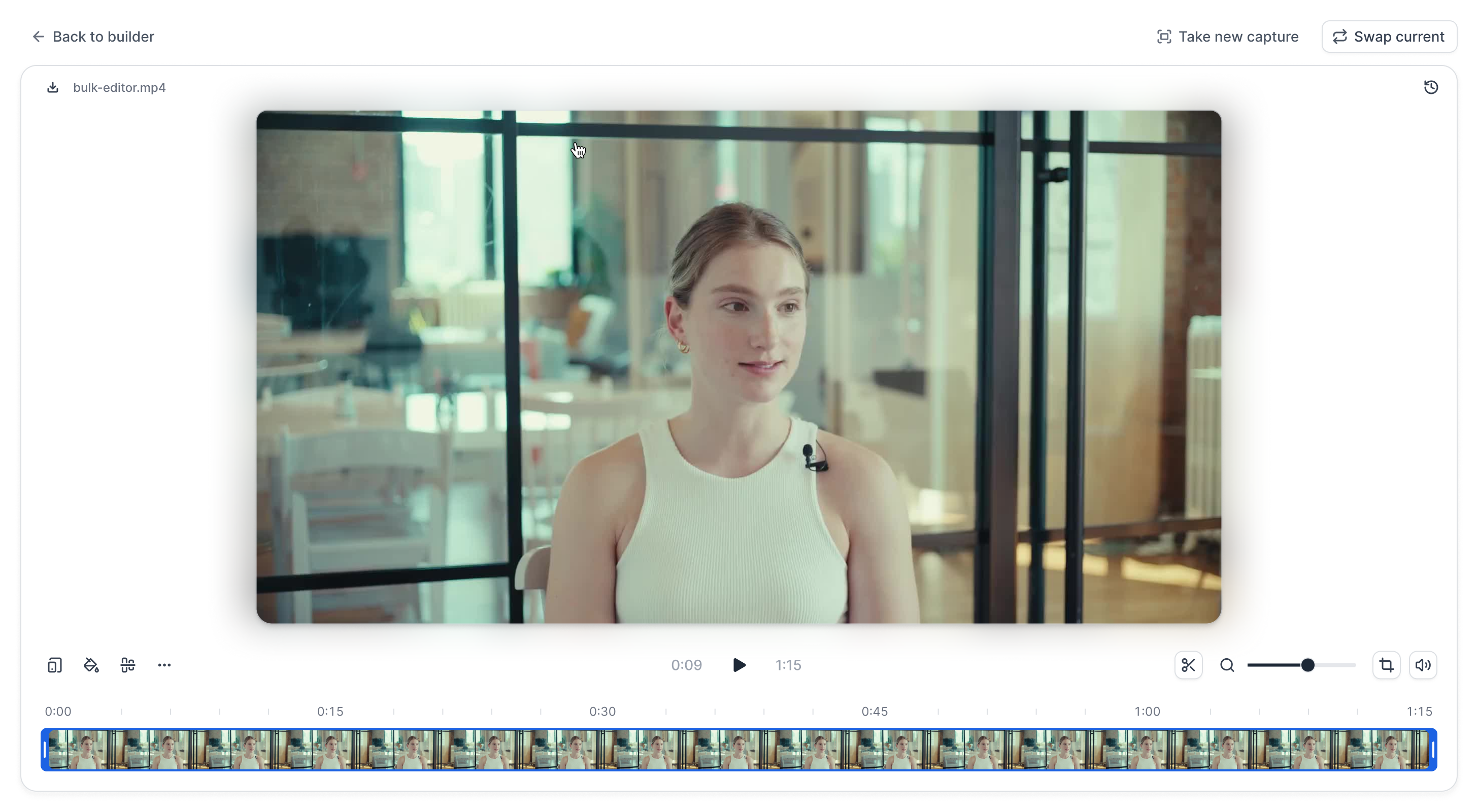
Trim
Trimming lets you cut out the beginning or end of a video so your demo starts and ends exactly where you want. The timeline at the bottom of the editor shows your full video as a strip of frames, with a ruler of timestamps above it. Use the blue trim handles on either end of the strip to set your trim points. Everything outside the handles is left out of the demo, and the kept range stays outlined in blue. Use these controls to navigate and fine-tune your trim:- Play/Pause — Preview your video to find the right cut points
- Volume — Set the preview volume while you work
- Zoom slider — Zoom the timeline up to 8x for more precise control over short clips
Remove a section
Removing a section cuts a stretch out of the middle of a video. Drop a slow page load or a wrong turn without re-recording.1
Select the section
Drag across the timeline to select the stretch you want to cut.
2
Remove it
Click Remove on the selection, or the button
in the playback controls. The removed stretch turns gray on the timeline and is skipped during
playback.
3
Change your mind
Click a removed stretch to select it, then press Delete or Backspace to bring that
footage back.
Trimming and removing sections aren’t available for videos over 250MB. You can still play and
scrub a video that large.
Crop
Cropping lets you define a specific region of the video frame to keep, removing any surrounding areas you don’t want to show. To enter crop mode, click the Crop button in the playback controls. A crop overlay with drag handles will appear over the video preview. Drag the handles to adjust the crop area. The current dimensions are shown in pixels as you resize. Use the aspect ratio dropdown to constrain your crop to a common format:
When you’re satisfied with the crop area, click Apply to confirm. To exit crop mode without making changes, click Discard.
Saving your edits
Once you’ve finished trimming, removing sections, and cropping, click Save to apply your edits. The edited video replaces the original and is ready to use in your demo.Your trim, removed sections, and crop are applied together when you save. You can adjust any of
them at any point before clicking Save.
Video capture controls
Video captures can be a good option for showcasing dynamic content, such as animations or user interactions like drag-and-drop. To control the following settings, select Video options from the Capture dropdown in the Demo Builder. You can also select Advanced on a Video capture in the Flow builder:- Autoplay
- Playback controls
- Audio
- Loop video
Autoplay your video capture when a viewer lands on the step. This creates a smooth, immediate viewing experience without requiring the user to click play.
If the video capture is on the first step, audio will not play until the visitor has interacted with the demo (such as clicking or scrolling) due to browser restrictions.
Example Media capture demos
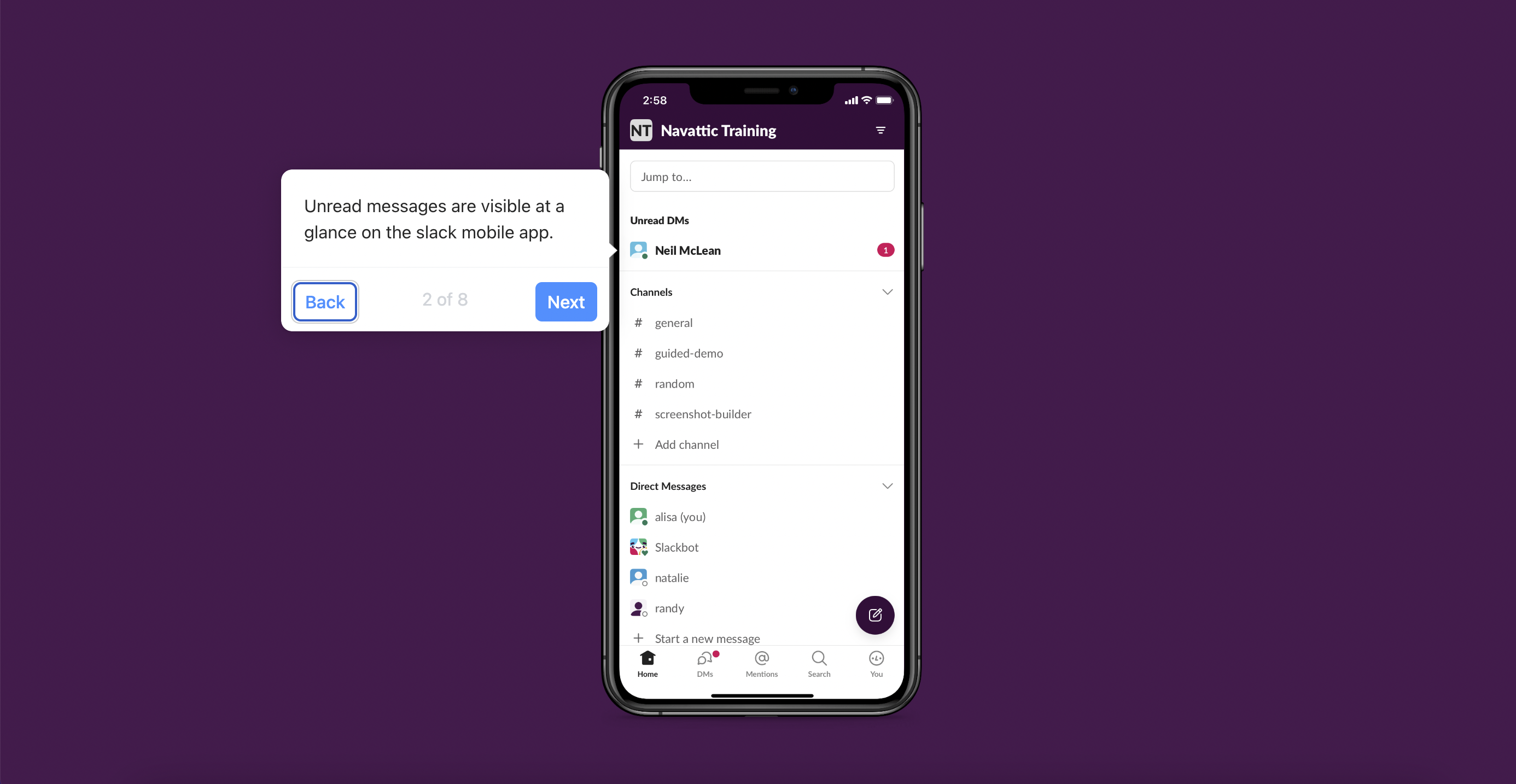
Slack Mobile App Demo
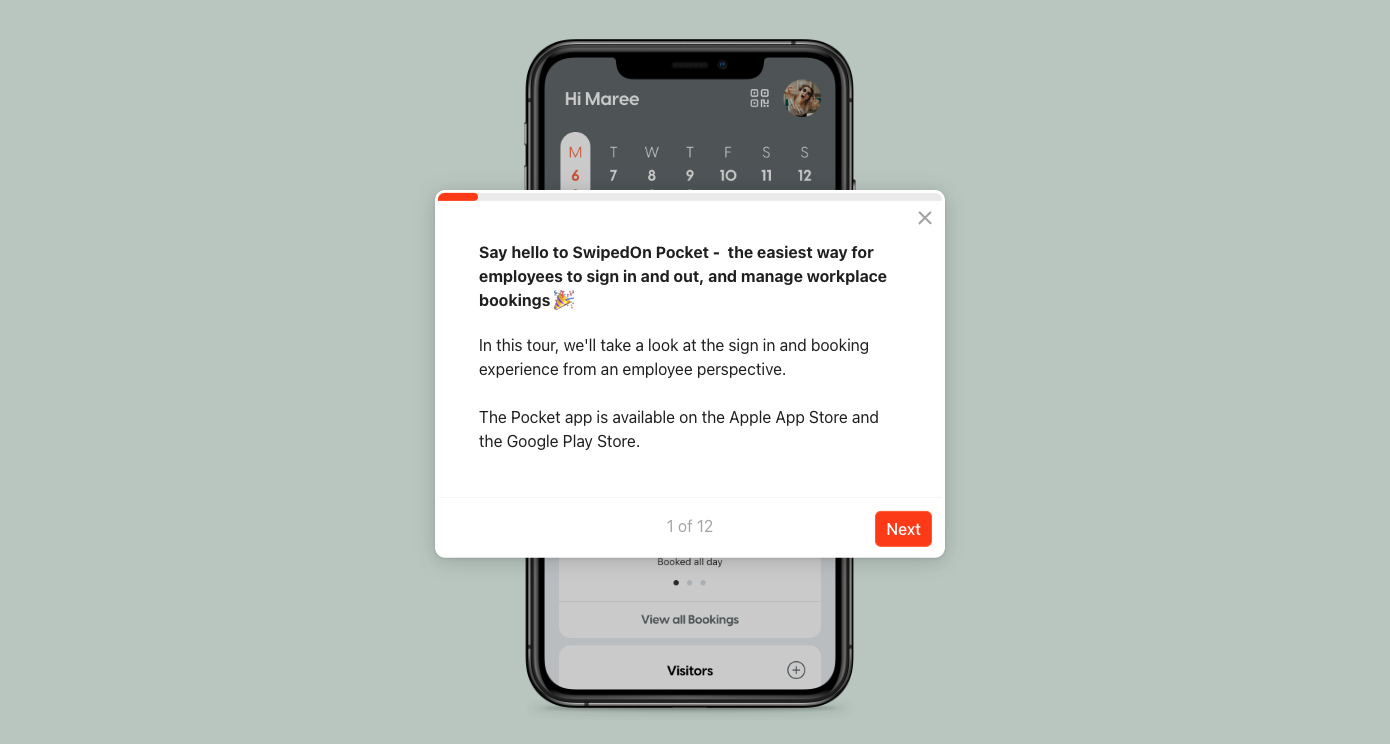
SwipedOn Employee App
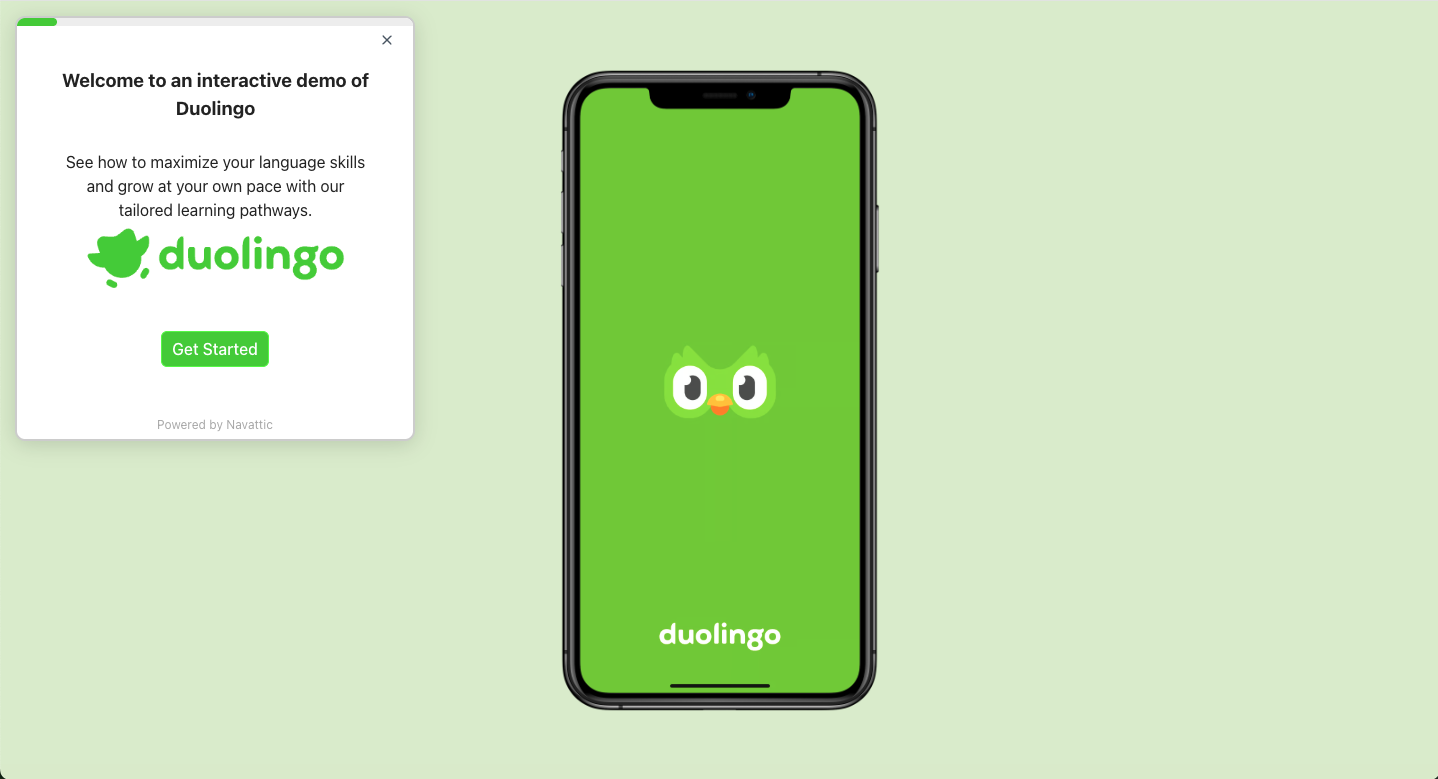
Duolingo
FAQ
Can I add device borders to a screenshot?
Can I add device borders to a screenshot?
Navattic includes mobile, tablet, and desktop borders for Apple and non-Apple devices. Adding a device border helps end users best visualize your desktop or mobile application. Learn more about’ ’ adding a device border to a media capture.
Can I use a PDF in my demo?
Can I use a PDF in my demo?
Yes, to add a PDF to your demo, you’ll have to convert the file to a .PNG or .JPEG file before uploading it as a Media Capture. We recommend using this free online converter: https://www.freeconvert.com/pdf-converter/download.Watch a 1-minute tutorial on converting and uploading PDFs in Navattic.
How can I get my screenshot to better fit the device borders?
How can I get my screenshot to better fit the device borders?
Using device mode in Google Chrome
paired with a tool like
this
, you are able to take screenshots that better fit with the device borders.
Can I edit a media capture using the Capture Editor?
Can I edit a media capture using the Capture Editor?
Yes. Open a media capture and click Edit to open the Media Capture Editor. The toolbar under the capture gives you crop, blur, and draw tools to clean up and annotate your capture, and Copilot editing to change part of an image from a written description. For video captures, use the built-in Video Editor to trim and crop footage.
How do I avoid the need to scroll when using a device border?
How do I avoid the need to scroll when using a device border?
Match your image’s aspect ratio to the device frame before uploading. For example, the Desktop border uses a 3:2 ratio. Screenshots that don’t match this ratio will require scrolling inside the frame.One approach: create a Google Slides deck set to the same ratio as your target device border, add your screenshots to each slide, and export as PNG. See the FAQ above for a full list of aspect ratios by device type.